EN
EN



The Hidden Cost of a Human Touch in Picking
Walk into any busy fulfillment center during the holiday rush, and you will see the chaos unfold. During a site visit to a mid sized warehouse a couple of years back, a manager showed me a return bin filled with expensive noise canceling headphones. The reason they came back was simple. A picker, exhausted after an eight hour shift, confused the standard black model with the premium wireless version because the packaging looked nearly identical under fluorescent lights. This is not a rare lapse in judgment. It is a biological certainty. The human brain is brilliant at complex problem solving, but it is terrible at monotonous repetition for hours. When a worker has to distinguish hundreds of SKUs passing by every hour, the cognitive load eventually causes a slip. The error rate for manual sorting typically sits somewhere between one and three percent, depending on product similarity and fatigue levels. While that sounds low, a single percentage point on a hundred thousand units shipped monthly translates into a thousand angry customers. That is a fire you constantly have to extinguish, and it burns through profit margins faster than anything else in the logistics chain.
Decoding the Brain of a Modern Sorting System
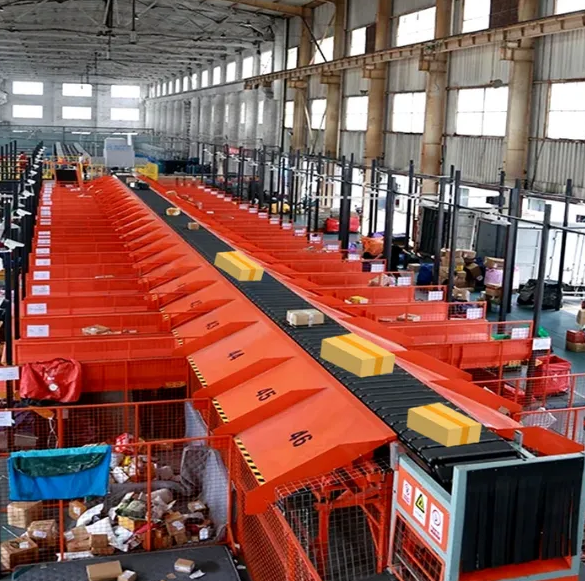
How does a machine solve the problem of visual fatigue? It does not rely on tired eyes. A modern automatic item sorter uses a fusion of sensor technologies that work in millisecond synchronization. As an item rides along a precision belt, a barcode scanner captures its identity from five or six sides, ensuring no blind spots exist even if the label is slightly wrinkled. But the real sophistication lies in the redundancy. Top tier systems now integrate machine vision cameras that literally photograph the physical dimensions and shape of the carton, comparing this data in real time against the shipping manifest stored in the database. If you have a shoebox that was supposed to contain the shoes but was accidentally left empty, a weight check scale built into the conveyor segment flags the anomaly immediately. This triple verification loop—scan, see, weigh—happens before the carton ever touches a diverting arm. It is not just automation. It is a closed loop quality audit happening in a fraction of a second, leaving zero room for subjective guesswork.
What Industry Data Reveals About Accuracy Thresholds
Industry benchmarks tell a compelling story about the gap between manual and automated accuracy. Data from leading material handling associations suggests that manual operations typically plateau at roughly 99% accuracy, which sounds excellent until you calculate the financial implications. In the high velocity e-commerce sector, automated sorting consistently pushes that number to 99.99% or higher. The statistical difference seems minor, yet the operational reality is massive. That mathematical leap represents a reduction from a single error per hundred orders to one error per ten thousand orders. For a business shipping tens of millions of parcels annually, this literally means the difference between dealing with hundreds of thousands of returns versus a few hundred. Experts in lean logistics often argue that error reduction is not about fixing mistakes; it is about eliminating the secondary hidden factory required to handle returns. Every mis sort creates an exponential chain of manual rework, shipping label corrections, and customer service tickets that clog the system. By hitting the four nines of accuracy, you essentially shut down that hidden factory entirely.
Speed Without Sacrifice Through Logical Diverting
There is a common misconception that high speed processing creates chaos. Actually, physical velocity is secondary to control logic. The true brilliance of a sorting system is in the Warehouse Control System software orchestrating the flow. Think of a busy highway interchange. Without metering lights and precise lane assignments, cars crash. Similarly, items on a conveyor need precise gapping to prevent jostling. The logic within the system manages merge points where multiple infeed lines come together, dynamically adjusting the spaces between cartons using variable frequency drives on the motors. When a carton approaches its designated chute, the shoe sorter or pop up wheel diverts it with a geometry specific motion. If the package is traveling fast but is lightweight and irregularly shaped, the system reduces the divert force to prevent it from bouncing into the wrong lane. This fine tuned physical intelligence ensures that the sorting action itself does not become a source of error. It is a delicate ballet of pneumatics and servo motors governed by algorithms that adapt to varying payload characteristics on the fly, maintaining a steady cadence without collateral damage.
The Ripple Effect on Customer Retention and Brand Trust
A mis pick is never just a logistical headache. It is a breach of the customer’s trust. When someone deliberately selects a specific product, colors, and size, they have an emotional expectation. Receiving the wrong item breaks that emotional contract instantly. In the subscription heavy digital marketplace, the retention cost of a single error is staggering. Customers do not just return the item silently. They often post unboxing videos or leave negative reviews that linger forever on product pages, contaminating the purchase decision for hundreds of future buyers. By installing a highly accurate automated sorting line, a brand is not just optimizing operations, it is safeguarding its market reputation. The financial model is transparent. The immediate return on investment usually comes from the elimination of chargebacks and reshipping expenses. However, the long term commercial value comes from the silent churn prevention. When customers consistently receive exactly what they ordered within the promised window, trust becomes institutional, and the brand morphs into a utility that customers rarely feel the need to switch away from.
Engineering Precision for Long Term Operational Scalability
All these sophisticated electronics and software would be worthless without the mechanical backbone that keeps everything aligned. This is where the material science of the conveyor framework becomes critical. Sorting machines operate in harsh, dusty industrial environments with constant vibration. If the steel frame twists or the rollers wear down unevenly, the entire geometric calculation of the barcode scanners falls apart. During a system integration in a high dust environment, UIB observed that facilities using precision ground bearings and rigid, deep channel framing maintained baseline calibration for years longer than those with lighter gauge materials. This heavy duty engineering philosophy ensures that sensors stay aligned, belts track perfectly straight, and diverting mechanisms fire consistently without drifting over time. For businesses looking to scale operations, the modularity of these systems allows a facility to double its throughput simply by adding extra chutes and extending the line, rather than reengineering the whole layout. It is a long term play where the initial quality of the physical supply chain components directly dictates the system’s lifecycle accuracy and uptime, proving that robust manufacturing is the quiet foundation upon which all digital intelligence rests.
Table of Contents
- The Hidden Cost of a Human Touch in Picking
- Decoding the Brain of a Modern Sorting System
- What Industry Data Reveals About Accuracy Thresholds
- Speed Without Sacrifice Through Logical Diverting
- The Ripple Effect on Customer Retention and Brand Trust
- Engineering Precision for Long Term Operational Scalability