 ×
×

(1) Limitations in Conveying Angle and Flexibility
Traditional inclined conveyors are mostly designed with a fixed angle (10°-30°), which cannot adapt to complex terrains and equipment layouts. They require pre-customization, leading to long installation and commissioning time, high costs, and restrictions on the planning of material conveying routes.
(2) Risk of Material Sliding and Spilling
When conveying bulk materials, small items, or in high-angle (above 25°) scenarios, ordinary conveyor belts have insufficient anti-slip performance, and the unreasonable design of side guards/partitions easily causes materials to slide and spill. This results in material waste, equipment damage, and potential safety hazards.
(3) High Equipment Energy Consumption and Frequent Maintenance
To overcome gravity, motors require high power output, leading to high energy consumption. Old equipment has outdated drive systems; components such as chains and conveyor belts wear quickly, resulting in frequent breakdowns and shutdowns, as well as significant maintenance costs and downtime losses.
(4) Difficulties in Conveying Special Materials
Viscous materials (e.g., sauces, wet clay) are easy to stick and hard to clean; high-temperature materials (e.g., cement clinker) may damage conveyor belts; fragile materials (e.g., circuit boards) are prone to breakage due to vibration and collision. Ordinary conveyors cannot handle these issues effectively.
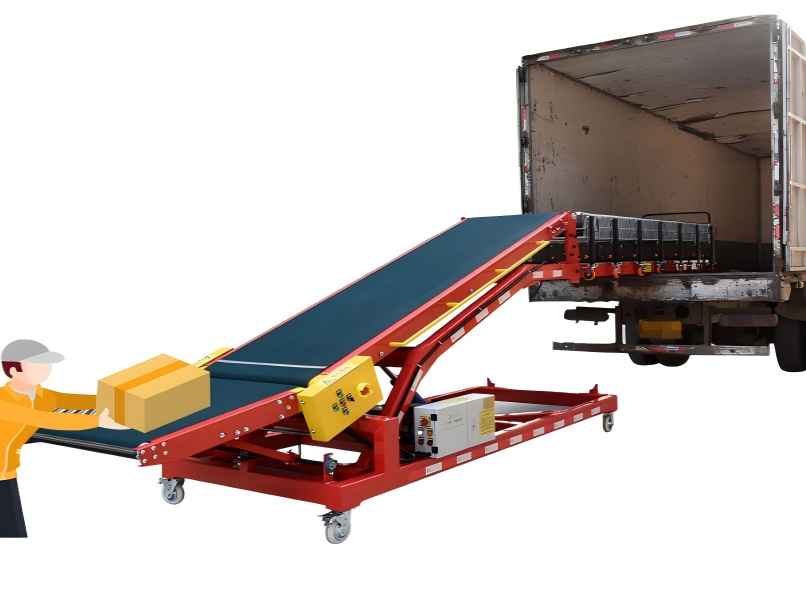
Innovative Variable-Angle Design
1、Modular Combined Support: Enables stepless angle adjustment (0°-60°). Modular splicing adapts to on-site needs, shortens installation and commissioning time, and reduces reliance on customization;
2、Intelligent Angle Adjustment System: Motor-driven automatic angle adjustment, supporting angle memory and quick switching to improve equipment flexibility.
Optimized Anti-Slip and Anti-Spill Technology
1、High-Performance Conveyor Belt: Features special rubber formula + wear-resistant patterns, adjustable edge guards + detachable partitions for high angles, enhancing anti-slip performance;
2、Dynamic Monitoring and Handling: Laser sensors + cameras for real-time monitoring. When abnormalities occur, it automatically alarms, adjusts speed, and activates scraper cleaning to reduce spilling.
Energy-Saving and Intelligent Maintenance Solutions
1、Energy-Saving Drive System: Permanent magnet synchronous motor + intelligent frequency converter, reducing energy consumption by 20%-30%. Optimized transmission structure minimizes energy loss;
2、Intelligent Maintenance Platform: IoT sensors collect operating data, and AI predicts faults and enables remote monitoring, reducing inspection work and downtime.
Customized Solutions for Special Material Conveying
1、Viscous materials: Conveyor belts with special coatings + automatic cleaning devices to reduce adhesion and cleaning frequency;
2、High-temperature materials: High-temperature resistant conveyor belts (withstand 300℃-500℃) + air/water cooling systems to protect equipment;
3、Fragile materials: Polyurethane buffer conveyor belts + low-vibration route design, with precise speed control to reduce breakage rate.
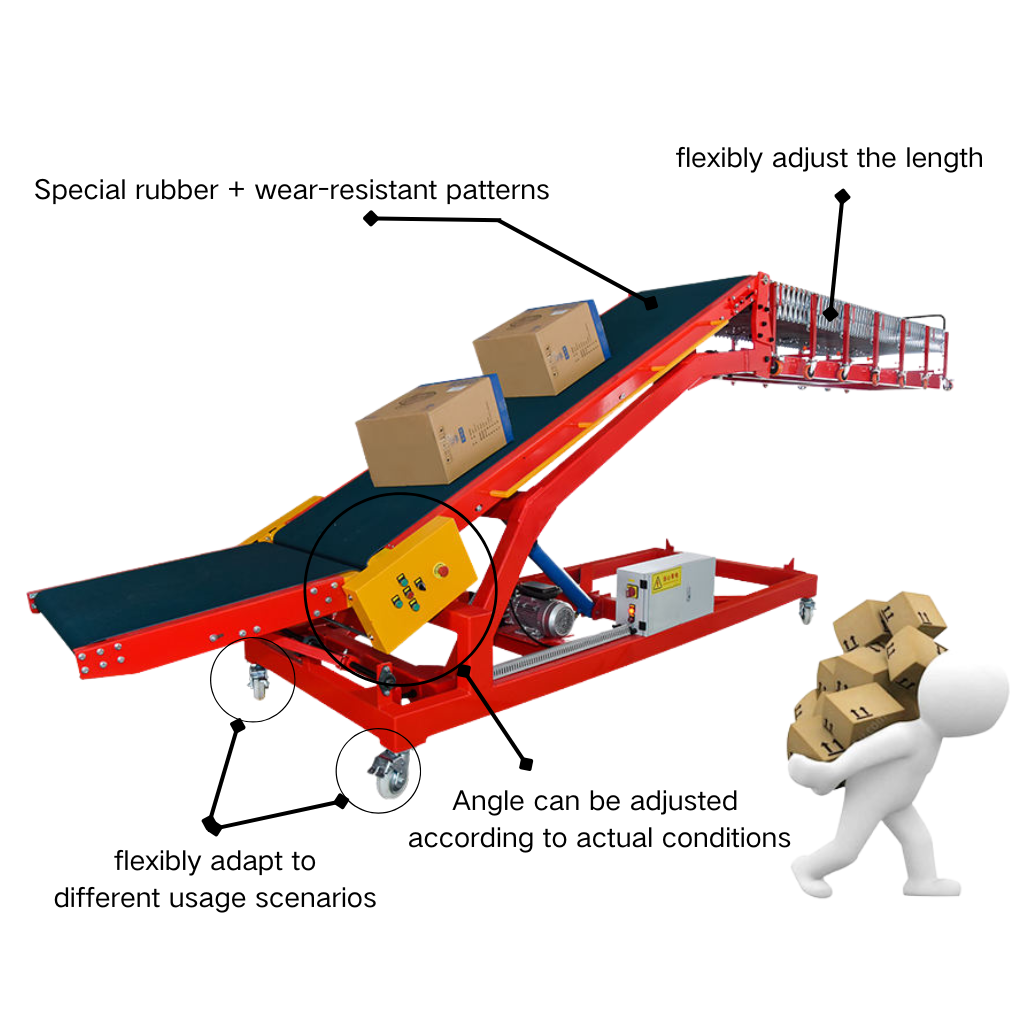
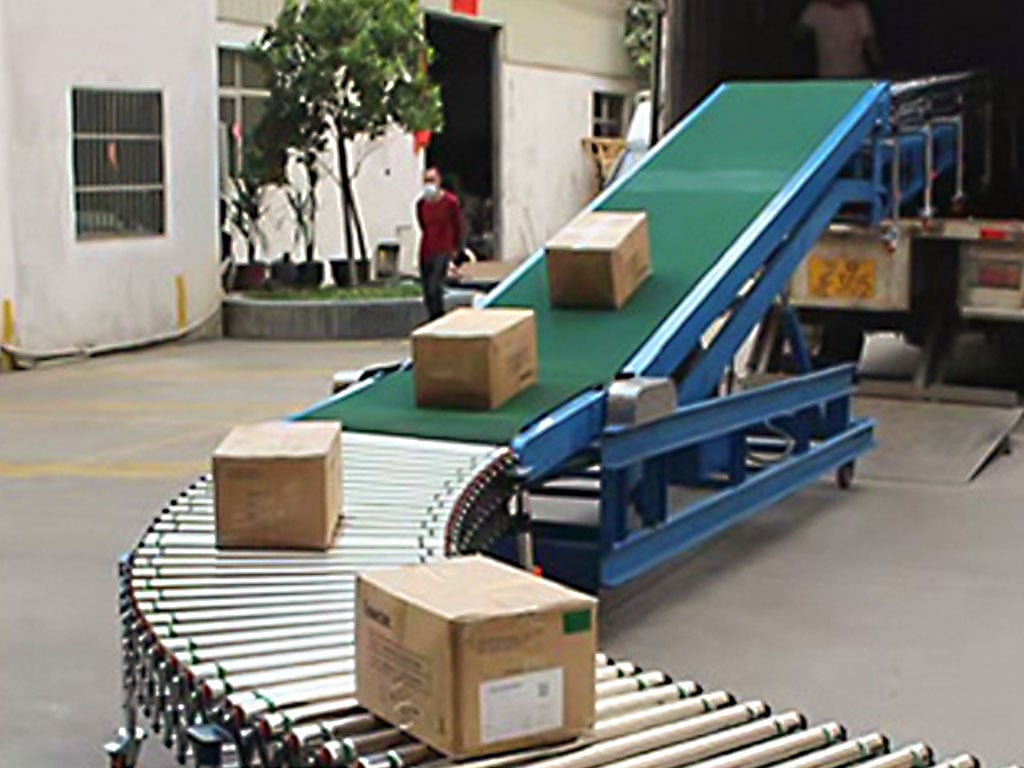
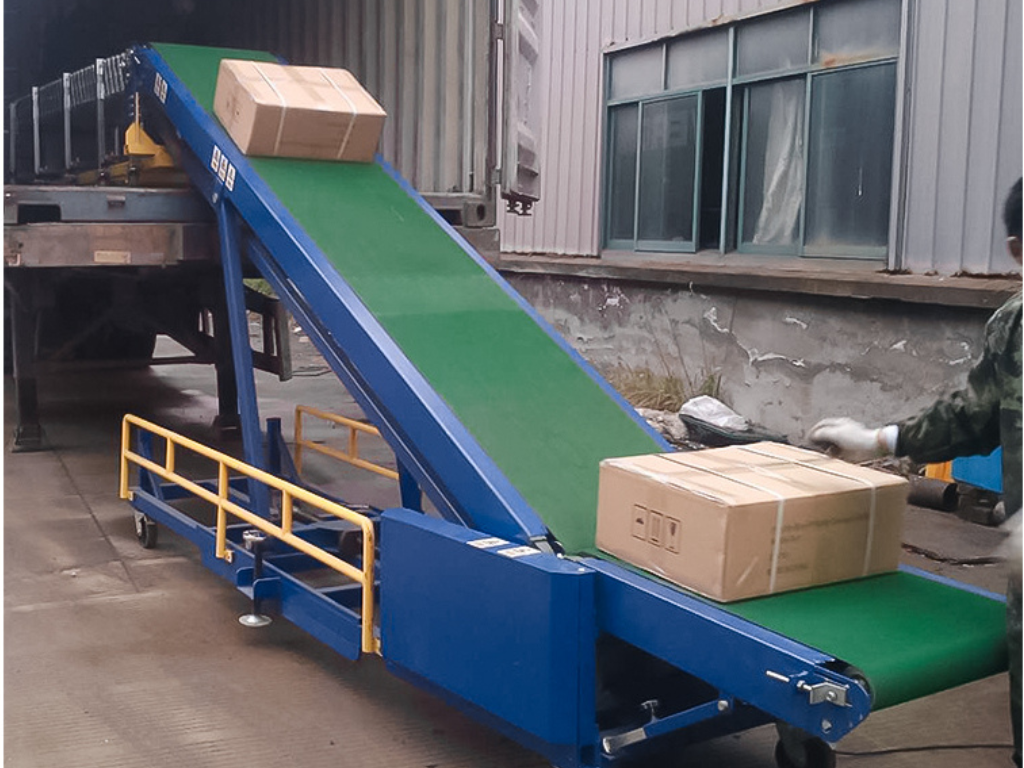
1、Variable-Angle Modular Conveyors: Two sets of stepless adjustable conveyors (with an angle range of 0°-60°) are deployed, equipped with modular supports. The angle can be quickly adjusted via the touch panel (for example, adjust to 18° when connecting 1.8m-high storage racks to small trucks, and to 32° when connecting 3.2m-high storage racks to container trucks). When not in use, the conveyors can be folded for storage, saving 40% of warehouse space compared to the original four fixed-angle conveyors.
2、Anti-Slip and Anti-Spill Upgrades: The conveyors are equipped with special rubber belts (with 3mm-deep diamond patterns) and 10cm-high adjustable side guards; for small parts, additional 15cm-wide detachable partitions are installed to divide the conveyor belt into 3 channels, reducing the material spill rate to below 0.5%.
Loading and unloading goods in the factory warehouse not only saves time but also labor, and can greatly improve the loading and unloading efficiency of workers.
UIB Xiamen is a 10-year factory supplying custom conveyor, sorting machine, forklift & material handling machinery for logistics, cold chain & manufacturing. Free customized solution available.
Room 1409, SM International Center, Xingshan Road, Huli District, Xiamen City, Fujian Province, China.
Copyright © 2025 by UIB (Xiamen) Bearing Co., Ltd. Privacy Policy

 EN
EN