EN
EN



When the Line Stops, Start with the Photocells and Scanners
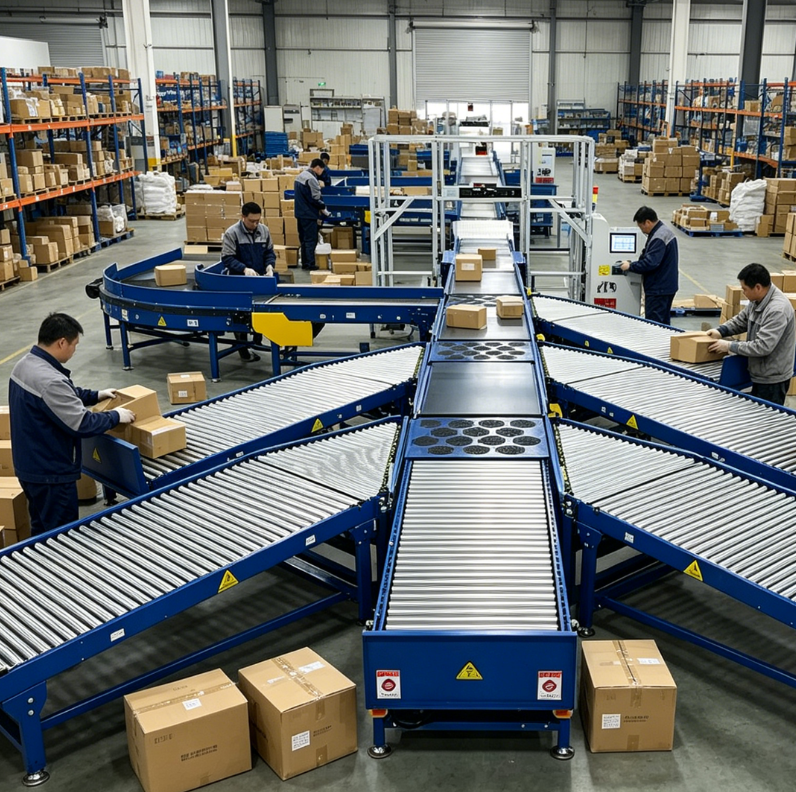
A sorting line that suddenly halts or misroutes packages is often suffering from a sensor problem, not a mechanical one. Photoelectric eyes get coated with dust from cardboard fibers, and a single obscured lens can stop a whole induction zone. Barcode scanners lose calibration when a mounting bracket vibrates loose, and the resulting no read rate climbs fast enough to overwhelm the manual recirculation lane. A parcel hub in Malaysia once spent two hours troubleshooting a cross belt sorter that kept sending every third item to the reject chute. The on site technician called an off site support engineer who asked him to text a photo of the top scanner window. The lens was covered in a fine layer of silicone spray mist from a nearby conveyor lubrication system. A quick wipe brought the read rate back above ninety nine percent. The lesson is simple: before assuming a mechanical crash, walk the line with a smartphone camera and look at every lens, reflector and photo eye alignment. Industry standards like ISO 2859 for sampling inspection are not written for sortation sensors, but the principle of systematic visual inspection they promote applies perfectly here. Most remote diagnosis sessions begin with those phone images.
Listening to Bearings and Rollers Before They Scream
A bearing about to seize or a roller that has worn flat will often announce itself through sound and vibration long before the sorter control panel logs a fault. A rhythmic squeak from a drive pulley or a grinding hum from a gravity roller bank is data, not noise. A distribution center in Chile had a sliding shoe sorter that started throwing tracking alarms at random intervals. A remote engineer asked the maintenance lead to hold a smartphone against the sorter frame at three different points and record ten seconds of audio at each. The playback revealed a distinct clicking at the shoe return sprocket, and the rhythm matched the cycle of a specific bearing that had lost its labyrinth seal and ingested grit. The bearing was replaced during a planned weekend window, and the tracking faults disappeared. For overseas warehouses, this kind of telephone triage works because standard deep groove ball bearings and conveyor rollers have predictable failure modes when they are under spec or under lubricated. UIB engineers often remind integrators that a simple vibration app on a phone, combined with a visual check for seal condition, can cut diagnosis time from hours to minutes.
When Diverters and Pushers Refuse to Fire
A diverter that stays silent when the control system commands it to fire often points to a pneumatic or electrical actuator failure, not a logic error. Solenoid valves stick when moisture or oil residue accumulates in the compressed air supply. Air cylinders lose pressure if the seals are worn or the fitting has a hairline crack. A food grade logistics warehouse in Australia dealt with a pop up wheel diverter that would work perfectly for twenty minutes and then miss every single package for the next five. Remote diagnosis started with a video call where the support engineer asked the operator to point the phone at the air pressure gauge while triggering the diverter repeatedly. The gauge needle dropped sharply with every cycle and recovered slowly, a classic sign of a restricted air line. The local crew found a kinked section of polyurethane tubing behind a guard panel, straightened it, and the diverter returned to full cycle speed. This kind of problem never appears in a PLC fault log. It only surfaces when someone observes the physical response of the actuator while the machine cycles. That is why the most effective remote diagnosis always pairs a screen share of the control interface with a live video feed from the mechanical zone in question.
Control Loops That Drift and Encoders That Lose Count
When a sorter starts placing items ten centimeters past the chute, the immediate suspect is often a faulty encoder or a slipping coupling. Incremental encoders on sortation conveyors count pulses to track carrier position, and a loose set screw or a degraded flexible coupling introduces a drift that accumulates over hundreds of cycles. An airport baggage handling facility described a situation where the tilt tray sorter gradually shifted its discharge point until bags started clipping the edge of the chute and tumbling. The on site team spent hours checking mechanical alignments, but a remote controls specialist asked them to mark the encoder shaft and coupling with a paint pen, run the sorter for fifty cycles, and then check if the marks still lined up. The coupling had slipped by nearly fifteen degrees. Tightening the set screw with the correct torque and applying thread lock compound solved the issue in under ten minutes. Encoder signal loss can also come from a frayed cable shield or an electrical noise source like a variable frequency drive that was recently installed nearby. Remote diagnosis that includes trending the encoder feedback signal over time, either through the PLC historian or a portable oscilloscope app, can catch these problems before they turn into physical damage to the chutes or the parcels.
The Simple Power of a Structured Remote Diagnostic Checklist
A good remote diagnosis does not rely on luck or an engineer's memory. It follows a sequence that rules out the most common causes in order of likelihood and ease of checking. Many experienced material handling support teams use a four step mental model: confirm the symptom with video, verify the sensor and actuator response live, review the recent maintenance log for any changes like a replaced motor or adjusted photo eye, and then narrow the mechanical suspects using sound, heat or visible wear. A warehouse in the Netherlands once solved a recurring jam on an induction belt in twelve minutes because the remote engineer asked the operator to point a thermal camera phone attachment at the drive roller bearings. One bearing was running thirty degrees Celsius hotter than the other three, and that temperature gap had been developing for at least a week according to the trend log that nobody had checked. Replacing the bearing before it seized prevented what could have been a full day of downtime during the peak holiday sort. The Material Handling Institute has published best practice guides that stress the value of condition monitoring data for exactly this reason. A thermal image, a sound clip and a photo of a seal are often more useful than a thousand lines of PLC code.
Why Component Quality Directly Affects Your Diagnosis Time
Every minute spent diagnosing a failure that could have been prevented by better components is a minute lost from production. Many chronic sorter faults trace back to the same root: underspecified bearings that wear prematurely, rollers that develop flat spots because the tube wall thickness was reduced to save cost, or seals that fail early and let contamination into the bearing raceway. A South African parcel sorter integrator found that after switching from generic conveyor rollers to precision units sourced from UIB, the number of bearing related service calls dropped by over sixty percent in the first year. UIB builds its deep groove ball bearings and conveyor rollers with a supply chain that controls steel chemistry, heat treatment and seal lip geometry, so the finished parts deliver consistent life even under the start stop loads and dusty environments common in sortation. For overseas warehouses that manage maintenance through WhatsApp calls and grainy video feeds, having components that fail predictably and rarely is a quiet superpower. When a problem does arise, UIB's technical support can pull up the exact bearing specification, suggest interchange options and ship replacements from regional stock within days. That combination of precision manufacturing and responsive logistics turns a ten minute diagnosis into a working solution, not just a finding report. A sorting line stays a sorting line, not a waiting line.
Table of Contents
- When the Line Stops, Start with the Photocells and Scanners
- Listening to Bearings and Rollers Before They Scream
- When Diverters and Pushers Refuse to Fire
- Control Loops That Drift and Encoders That Lose Count
- The Simple Power of a Structured Remote Diagnostic Checklist
- Why Component Quality Directly Affects Your Diagnosis Time