EN
EN




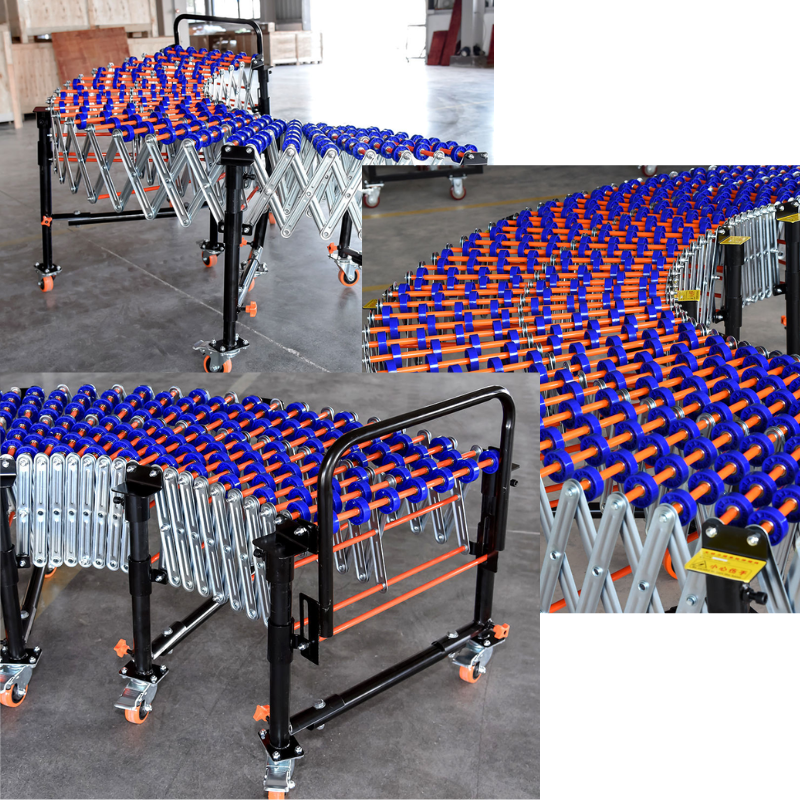
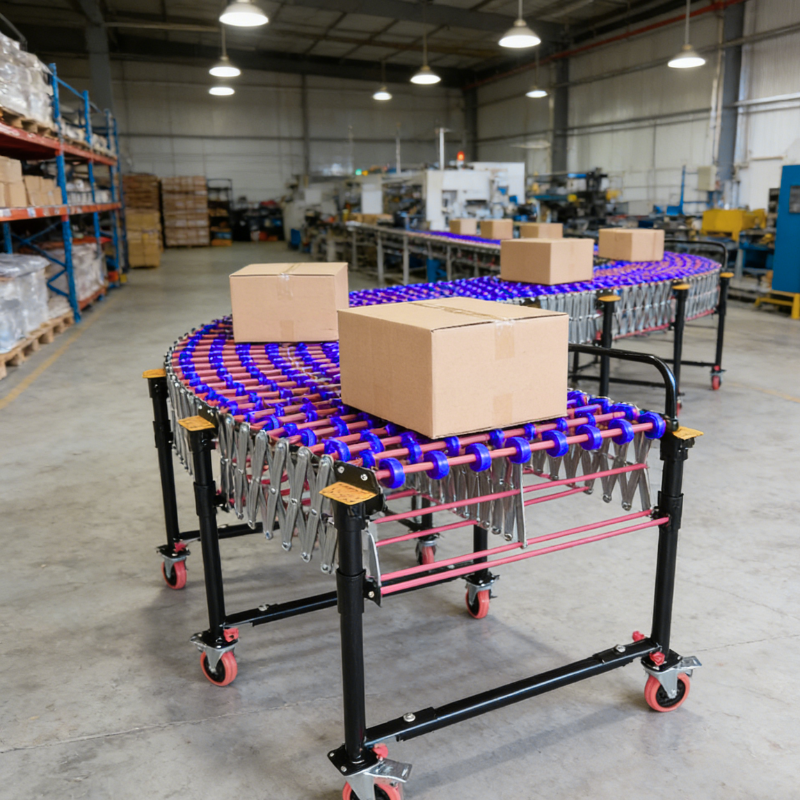
Unpowered Gravity Loaded Inline Skate Wheel Automatic Telescopic Roller Conveyor
Power-free & Energy-saving
Automatic Telescoping & Flexible Steering
Inline Skate Wheel Design: Smooth & Wear-resistant
Rapid Deployment & Portable Mobility
High Load Capacity & Stability
- Overview
- Recommended Products
Product Advantages
Power-free & Energy-savingIt relies on gravity and manual pushing to transport goods, eliminating the need for power sources like electricity or compressed air. This saves energy costs and reduces long-term maintenance expenses, and it can operate stably even in areas without power supply.
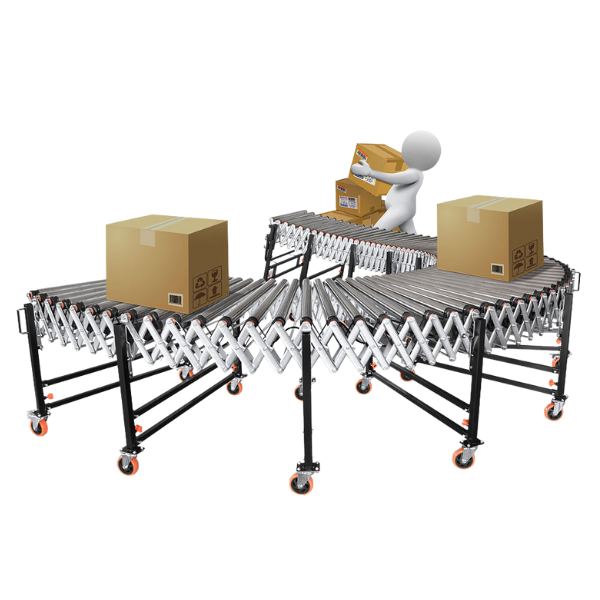
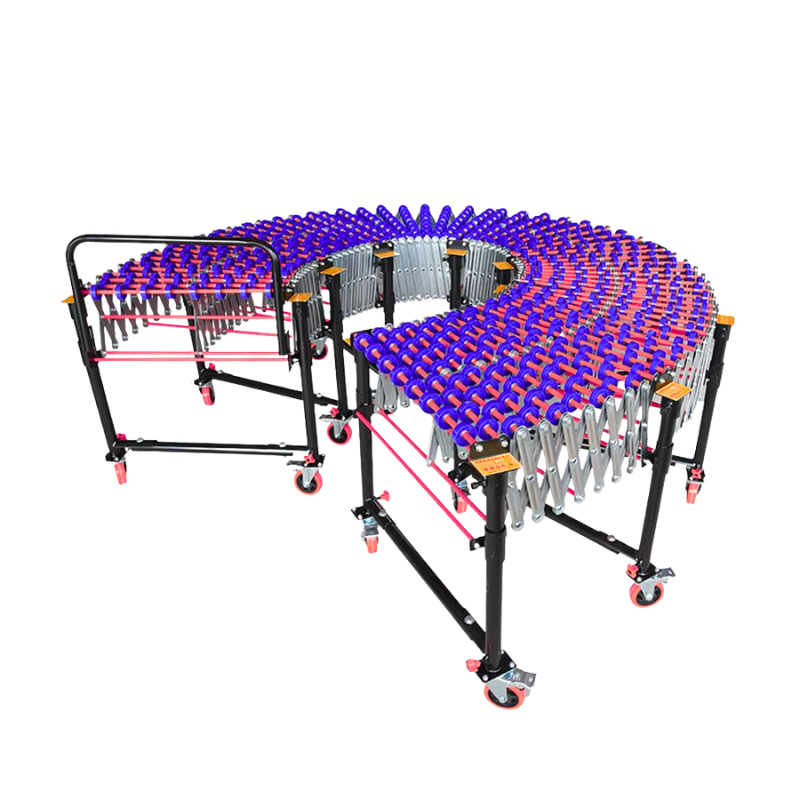
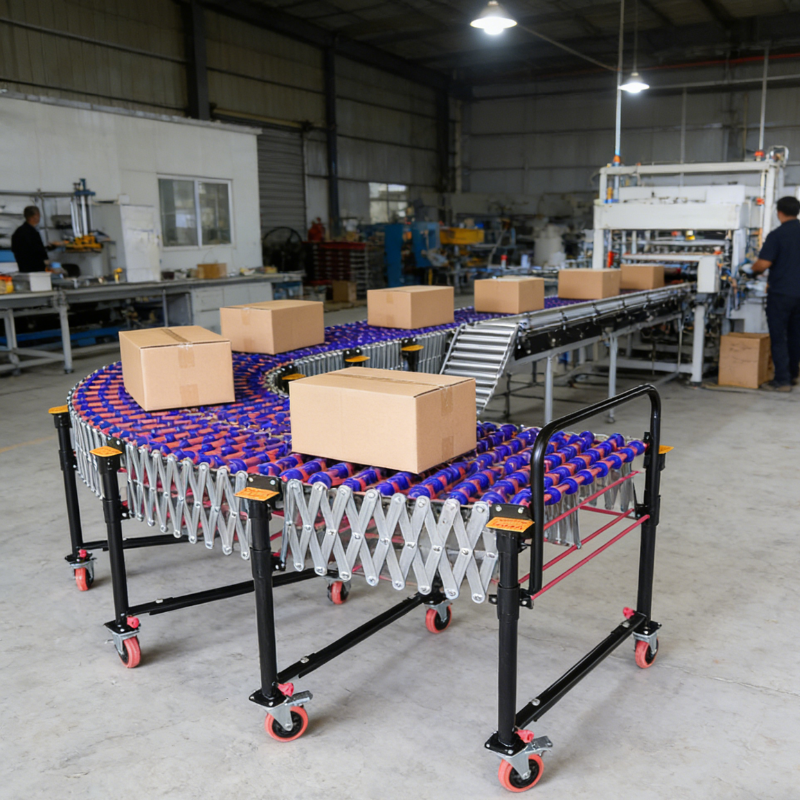
Automatic Telescoping & Flexible SteeringIt can freely adjust its length (typical telescopic ratio up to 1:3) and features a bendable structure. This allows it to adapt to complex conveying paths from straight lines to curves, easily navigating narrow or irregular loading and unloading spaces.
Inline Skate Wheel Design: Smooth & Wear-resistantThe high-wear-resistant nylon rollers (inline skate wheel structure) have anti-slip textures on the surface. They operate quietly, accommodate various packaged goods such as cartons, plastic boxes, and turnover bins, and reduce cargo jams and wear.
Rapid Deployment & Portable MobilityEquipped with swivel casters with brakes, a single person can move, deploy, and stow the equipment in just 1–2 minutes. It is ideal for temporary loading/unloading and multi-station transfers.
High Load Capacity & StabilityThe thickened carbon steel frame with reinforced crossbars supports a load capacity of 100–300kg per meter, enabling the conveying of stacked small-to-medium goods. Anti-slip foot pads and brake wheels prevent sliding or tipping during heavy-duty operation.
Product Description
This conveyor is a flexible, unpowered conveying device designed for logistics loading/unloading and factory material handling.It uses gravity as its core driving force and features inline skate-style roller sets for smooth cargo movement. It also offers telescoping, bending, and folding capabilities.The main structure consists of a thickened carbon steel frame, high-wear-resistant nylon rollers, telescopic linkages, and swivel mobile casters. When stowed, its volume is only 1/3 of the deployed size, greatly saving storage space.Additionally, red elastic tension ropes and reinforced crossbars enhance stability during heavy-load conveying.
Product Specifications
| Category | Details |
| Standard Telescopic Range | 2m–6m (customizable 1m–10m) |
| Roller Material | Wear-resistant nylon + anti-slip rubber ring |
| Load Capacity per Meter | 150kg (standard model) / 300kg (heavy-duty model) |
| Compatible Cargo Dimensions | Base plane ≥15cm, weight ≤50kg per unit |
| Frame Material | Thickened carbon steel (powder-coated for rust resistance) |
| Caster Configuration | 4-inch swivel casters with brakes |
| Stowed Dimensions | Approx. 1.2m × 0.6m × 0.5m (for 6m deployed model) |
| Operating Temperature Range | -10℃~50℃ |
Application Scenarios & Instructions
1. Logistics Loading/Unloading
Scenario: Courier hubs, third-party logistics warehouses for truck loading/unloading.
Usage: Place one end of the conveyor on the truck bed and extend the other end to the warehouse platform. Adjust the tilt angle to match the truck height. Workers simply place goods on the rollers, and gravity will slide them into the truck or warehouse. One unit can replace the efficiency of 3–4 manual handlers.
2. Factory Production & Material Handling
Scenario: Workshop material transfer in electronics, apparel, food, and other industries.
Usage: Bend or telescope the conveyor to fit the production line layout, connecting different workstations (e.g., from packaging stations to staging areas). This enables unpowered material flow, reducing worker fatigue and error rates.
3. E-commerce Warehouse Sorting
Scenario: Temporary sorting lines during peak sales, return processing areas.
Usage: Quickly deploy multiple conveyors to form a sorting matrix. Workers scan barcodes to direct goods to the correct chute via gravity, improving sorting efficiency. The equipment can be stowed quickly after events to save daily storage space.
4. Retail/Supermarket Replenishment
Scenario: Backroom replenishment for supermarkets, restocking for convenience stores.
Usage: Set up a temporary conveying channel between the warehouse and sales floor. Transport full cases directly to shelves, reducing manual trips and improving efficiency, especially during holiday peak periods.