 ×
×
You are considering a telescopic belt conveyor for your warehouse or production line because of how much it can improve loading and unloading speed. However, a big question might be, “How far does it actually reach?” Selecting the appropriate extension length isn't about simply picking the longest one. Instead, it's about choosing the most suitable length for your specific dock, truck, or container.
Think of the extension length as the conveyor's reach. A longer reach allows you to service deeper trailers from a single position, reducing the need to reposition the entire machine. However, it also affects the conveyor's retracted length, stability, and the space it occupies when not in use. So, what are your options? Let's explore.
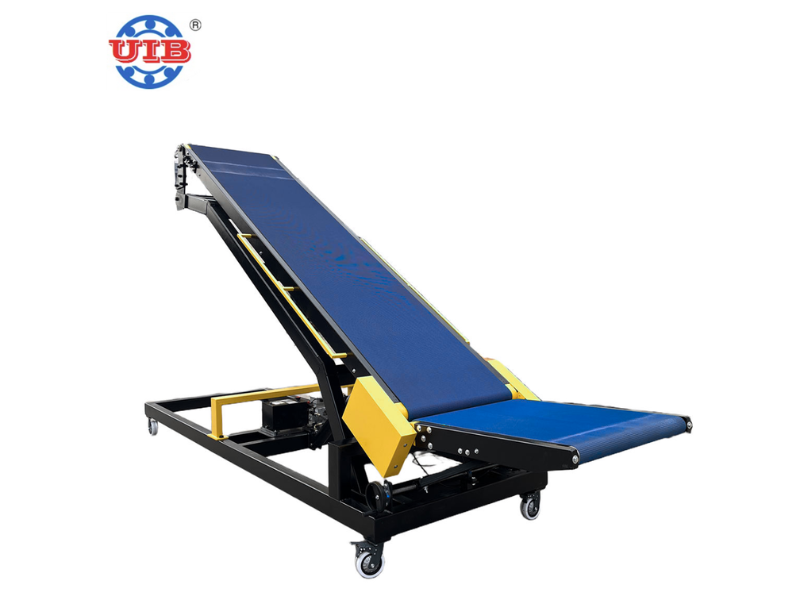
First, it's important to recognize that for a top-tier telescopic belt conveyor, the extension length is not a one-size-fits-all specification. While manufacturers offer standard models, true flexibility and optimal performance come from customization.
Standard ranges may start from a few meters for small vans and extend to 20 meters or more for large shipping containers. Yet, these are merely starting points. An industry veteran understands that standard parameters cannot cover the full scope of diverse logistics and manufacturing scenarios. The focus must be on providing tailored services from initial concept to final delivery.
Crucially, your available options should stem from a comprehensive assessment of your operational process. The most common determinants are:
Trailer and Container Dimensions: The internal length of the trucks or containers you most frequently handle is the primary driver for the required reach.
Dock Layout and Available Space: How much space is available behind the dock door when the conveyor is fully retracted? What is the distance from the dock face to the building's rear wall?
Operational Workflow: Does the conveyor need to service multiple bays, or is it dedicated to a single, high-volume lane?
This is where the value of an experienced supplier becomes evident. They offer more than just a machine; they assist in engineering a complete solution. The process for determining and building the optimal extension length typically involves clear, professional stages.
On Demand Scheme Design
It all begins with a detailed discussion of your needs. A professional team will inquire about your facility, freight types, and daily volume. They will analyze your dock layout and operational goals. Based on this, they will propose a technical scheme that outlines not only the potential extension length but also the necessary belt width, motor power, and control system to support that reach efficiently.
Sample Verification and Prototyping
For critical or highly customized applications, the next step is vital: sample verification. Creating a prototype or scaled model of the telescopic section allows for physical verification of reach, stability, and integration with your environment before full-scale production begins. This step, often encapsulated as “trial production first, risk reduction,” demonstrates a supplier's commitment to a flawless result.
Professional Drawing and Technical Confirmation
Once the concept is solidified, it moves into detailed engineering. Professional CAD drawings are produced, converting the agreed-upon design into precise manufacturing blueprints. These drawings detail every dimension, weld point, and component. You review and approve these documents to ensure the final product's extension length, retracted length, and all mechanical properties meet your exact requirements for a stable and efficient material conveying link.
When designing a conveyor with your supplier, keep these practical factors in mind:
Measure Everything Precisely. Obtain the exact interior dimensions of your most common trailers. Meticulously measure your dock space, including all clearances for doors, columns, and other equipment.
Plan for Future Needs. Consider how your business might grow or change. Opting for a conveyor with slightly more extension capability than you currently need can provide valuable flexibility for future operations with different trailer sizes.
Prioritize Stability and Safety. A longer, extended conveyor must remain rigid and safe. Ensure the design incorporates robust structural supports, reliable locking mechanisms, and appropriate safety guards. The chosen length must be matched with corresponding engineering strength.
Consider System Integration. The conveyor does not operate in isolation. Consider how its selected length will interface with upstream and downstream systems like sorters, palletizers, or fixed conveyors. A well-designed solution ensures a smooth and efficient connection.
In summary, the available extension length options for a telescopic belt conveyor are defined by your unique operational environment. While standard models exist, the best results are achieved through a collaborative, customized approach. By partnering with a supplier that offers full-process support—from thorough needs analysis and sample testing to precise engineering—you can secure a conveyor that extends exactly where and how you need it. This ensures you build a solid and efficient link in your material conveying system that delivers value precisely where it is needed.
 Hot News
UIB Xiamen is a 10-year factory supplying custom conveyor, sorting machine, forklift & material handling machinery for logistics, cold chain & manufacturing. Free customized solution available.
Room 1409, SM International Center, Xingshan Road, Huli District, Xiamen City, Fujian Province, China.
Copyright © 2025 by UIB (Xiamen) Bearing Co., Ltd. Privacy Policy

 EN
EN