 ×
×
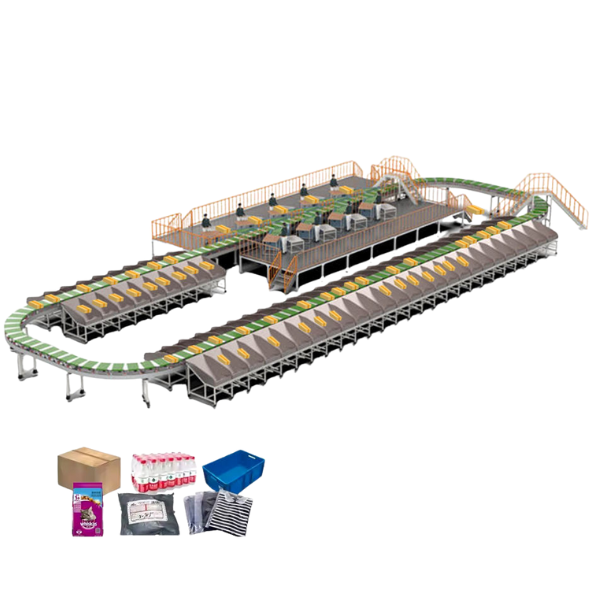
In regulated manufacturing settings, multilevel sorting lines now rely on advanced hyperspectral imaging tech that can spot tiny contaminants down to around 0.3 square millimeters. This kind of detection capability was actually highlighted in that recent Material Flexibility Study from 2023 as something pretty groundbreaking. The systems themselves hit nearly perfect accuracy rates at 99.97% within pharma applications when they combine those NIR sensors with smart machine vision software. What makes these new optical sorters stand out compared to older approaches is their ability to automatically recalibrate themselves roughly every fifteen minutes or so. This regular calibration helps meet those strict FDA requirements outlined in 21 CFR Part 11 regarding data integrity, which is obviously super important for quality control purposes.
The pharmaceutical sorting lines at multiple levels handle around 500 different material changes each day, all while keeping the air clean enough to meet ISO 14644-1 standards for Class 5 environments. According to an industry report published in 2023, nearly four out of five contamination problems actually happen when materials move from one sorting stage to another. That's why top companies are now putting RFID tags right into their conveyor systems. These tags let them track everything starting from basic ingredients all the way through to those final blister packs that go onto store shelves. The system works pretty well in practice too, though some smaller facilities still struggle with implementation costs.
Food processing lines require 316L stainless steel surfaces with electropolished welds (Ra ≤ 0.8 µm) to eliminate bacterial harborage points. Innovations like magnetic quick-release mechanisms reduce disassembly time by 40% compared to threaded fasteners. Engineers must also balance USDA-approved lubricants with the torque demands of incline conveyors handling 50kg produce loads.
High-speed confectionery lines process up to 2,400 items per minute with ±0.5mm positional precision, whereas pharmaceutical systems prioritize defect detection at 99.999% accuracy, limiting throughput to 600 items per minute. Adaptive motor controllers adjust belt speeds using real-time vision feedback, improving efficiency by 15–20% in hybrid operations.
One of Europe's big pharma companies recently overhauled their production line with a complex sorting system that needed no fewer than 17 engineering tweaks just to hit those tough EU GMP Annex 1 requirements. They've got these vacuum conveyors running alongside special antimicrobial 316L stainless steel surfaces throughout the facility, which helps stop microbes from getting stuck anywhere they shouldn't be. What really stands out though are these self-disinfecting camera housings they installed. According to last year's issue of PharmaTech Journal, this setup catches almost all particles at an impressive rate of 99.98%. Of course, all this came at a cost – around $2.3 million was spent on research and development for what turned out to be quite an innovative solution for maintaining cleanrooms.
Robotic sorting cells enable 5-minute product changeovers through:
This setup supports 83 product variants with less than 0.1% cross-contamination risk, essential for handling hormone therapies and cytotoxics.
To balance throughput and cleanroom compliance, engineers implemented:
The optimized line increased throughput by 30% while cutting energy consumption by 18% via regenerative braking in vertical sorters.
Collaboration between the pharma company and three automation specialists led to 14 patents, including:
These solutions now serve as the standard for 89% of new GMP-compliant sorting installations in Europe.
The hyperspectral imaging tech first created for checking pharmaceutical products has found new life in the world of fresh fruits and vegetables. These systems now use artificial intelligence to tell apart more than fifteen different kinds of produce, even when there's quite a bit of moisture variation around 85% relative humidity. When we combine information about weight measurements, near infrared spectroscopy readings, along with three dimensional shape analysis, the results speak for themselves. Missorting rates drop by roughly one third compared to what traditional grading techniques achieve according to research published in Frontiers in Plant Science back in 2023.
Self-optimizing neural networks dynamically adjust defect thresholds based on moisture readings and camera input, sustaining 99.2% grading accuracy even during peak humidity. This reduces false rejects by 41%, significantly preserving yield in facilities processing 40 tons/hour of washed vegetables.
Retrofitting older packing houses with AI-enabled modular components has cut integration downtime by 65%. Standardized interfaces allow phased upgrades without halting operations—critical during seasonal peaks. Hybrid systems combining legacy mechanical sorters with AI vision modules deliver 28% higher throughput than full replacements, according to a 2023 agricultural automation study.
Modern food-grade sorting lines achieve IP69K protection through sealed electronics and corrosion-resistant alloys. Automated CIP cycles with AI-optimized chemical dosing reduce water use by 18% while meeting USDA/FDA sanitation standards. Recent deployments report 92% fewer microbial contamination incidents than traditional wash-and-sort setups.
Pharmaceutical and food sectors are increasingly adopting modular multilevel sorting designs first developed for electronics manufacturing. A 2023 Material Handling Institute study shows 68% of automated warehouses now use standardized conveyor interfaces compatible with both medical devices and packaged foods, lowering integration costs while preserving sector-specific hygiene requirements.
While pharmaceutical lines demand isolator-protected 0.5mm sorting precision for blister packs, produce processors need 20mm tolerance systems capable of handling 20,000kg/hr loads. The 2024 Industrial Automation Report highlights differing alloy specifications—pharmaceutical-grade 316L versus food-contact 304 stainless steel—reflecting distinct sanitary and durability priorities.
Integrated vibration and thermal sensors predict maintenance needs by monitoring equipment health. One automotive parts supplier reduced unplanned stoppages by 37% by correlating motor temperature trends with sorting accuracy deviations across their multilevel line.
Manufacturers deploy portable 1:5 scale testing units to simulate full-line performance before deployment. These models validate parameters such as inclined belt angles for fragile items or compressed air usage at varying elevations, following best practices outlined in Factory Design Best Practices.
Cross-sector collaboration accelerates innovation—food processing engineers recently adapted pharmaceutical track-and-trace systems, reducing produce misgrading by 29% in pilot trials. Such knowledge transfer strengthens system resilience and operational intelligence across industries.
 Hot News
UIB Xiamen is a 10-year factory supplying custom conveyor, sorting machine, forklift & material handling machinery for logistics, cold chain & manufacturing. Free customized solution available.
Room 1409, SM International Center, Xingshan Road, Huli District, Xiamen City, Fujian Province, China.
Copyright © 2025 by UIB (Xiamen) Bearing Co., Ltd. Privacy Policy

 EN
EN