 ×
×
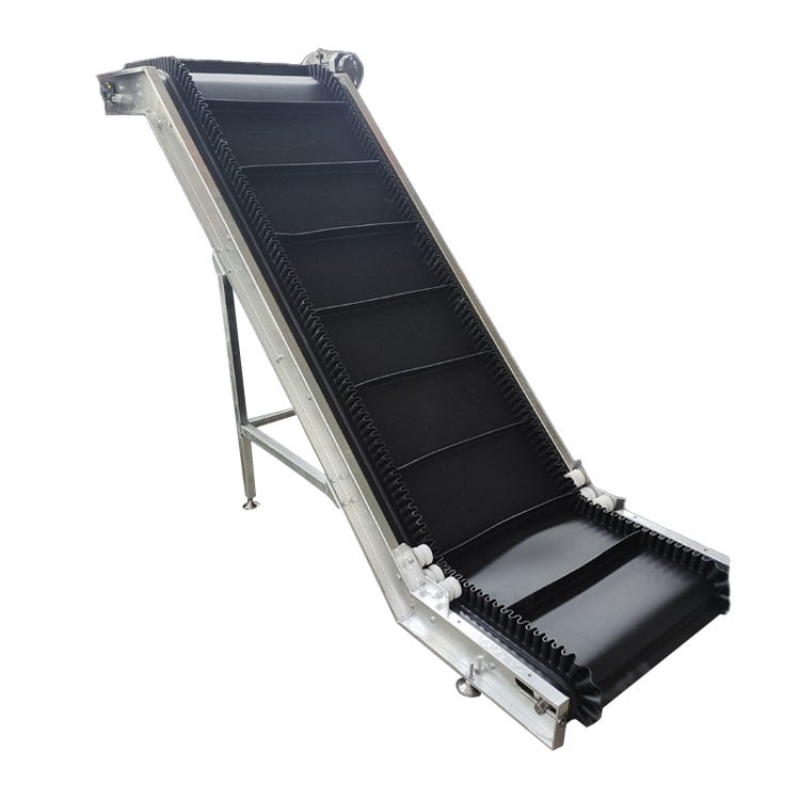
In a food processing plant, cleanliness is not just about passing inspections. It is about keeping people safe. Bacteria can grow on any surface that holds moisture or food residue, and a conveyor belt that runs for hours at a time touches every single product that passes through the facility. Traditional flat belt conveyors have plenty of places where food particles can get trapped, under the belt, around the pulleys, in the seams. Cleaning those areas thoroughly between production runs takes time and labor. That is why more food manufacturers are turning to the slat conveyor. Its design makes cleaning faster, easier, and far more effective.
The biggest reason a slat conveyor is easy to clean comes down to its modular construction. Instead of one continuous belt, a slat conveyor uses individual interlocking slats that form the conveying surface. This modular design means that individual sections can be removed without tools, giving access to the frame and internal components that sit underneath. Some newer models feature tool less disassembly, where the sidewalls come out without any tools and the belt lifts away for complete access to the conveyor body. Once disassembled, every component can be washed down and sanitized separately. This level of access is simply not possible with a traditional one piece conveyor belt.
Food processing environments are wet, often hot, and subject to frequent washdowns with water and cleaning chemicals. Any equipment that cannot handle those conditions will rust, corrode, or harbor bacteria in crevices. A slat conveyor built for food processing uses stainless steel for the frame, the slats themselves, and all exposed hardware. Stainless steel resists corrosion, does not absorb moisture, and can handle repeated exposure to cleaning agents without degrading. Some designs also use food grade plastic slats made from materials like HDPE, which are lightweight, non porous, and compliant with FDA food contact standards. This combination of stainless steel and food safe plastics creates a system that is built from the ground up for hygienic operation.
The geometry of a slat conveyor is inherently cleaner than many alternatives. The interlocking slats create a relatively flat surface with fewer seams and gaps compared to a traditional belt wrapped around rollers. There are no places where food particles can wedge themselves deep inside the mechanism and sit there for days. When the slats are properly designed with smooth edges and tight tolerances, debris simply has nowhere to hide. This flush surface design means that a rinse down with water removes the vast majority of residue, and what remains is easily reached with a brush or cloth.
In a busy food plant, cleaning happens every day, sometimes between every production batch. A well designed slat conveyor integrates features that support this routine. Waterproof NEMA rated controls and enclosed drive systems protect the electrical components during washdown. Adjustable speed controls allow the belt to be run slowly during cleaning so that brushes or spray bars can work across the entire surface. Some systems include a patented design where the entire belt, including curved sections, can be removed without tools for deep cleaning. The belt can then be hosed down and reassembled quickly, minimizing downtime between production runs.
Food safety standards like HACCP and FDA regulations are not getting any less strict. A conveyor that is hard to clean puts a facility at risk of audit failures and, more importantly, product contamination. A slat conveyor with stainless steel construction and modular access makes compliance easier. The cleaning process is faster and more thorough, which means sanitation crews can do a better job in less time. For plant managers, this means fewer headaches during inspections and greater confidence that the equipment is not going to be the source of a contamination issue.
 Hot News
UIB Xiamen is a 10-year factory supplying custom conveyor, sorting machine, forklift & material handling machinery for logistics, cold chain & manufacturing. Free customized solution available.
Room 1409, SM International Center, Xingshan Road, Huli District, Xiamen City, Fujian Province, China.
Copyright © 2025 by UIB (Xiamen) Bearing Co., Ltd. Privacy Policy

 EN
EN