 ×
×
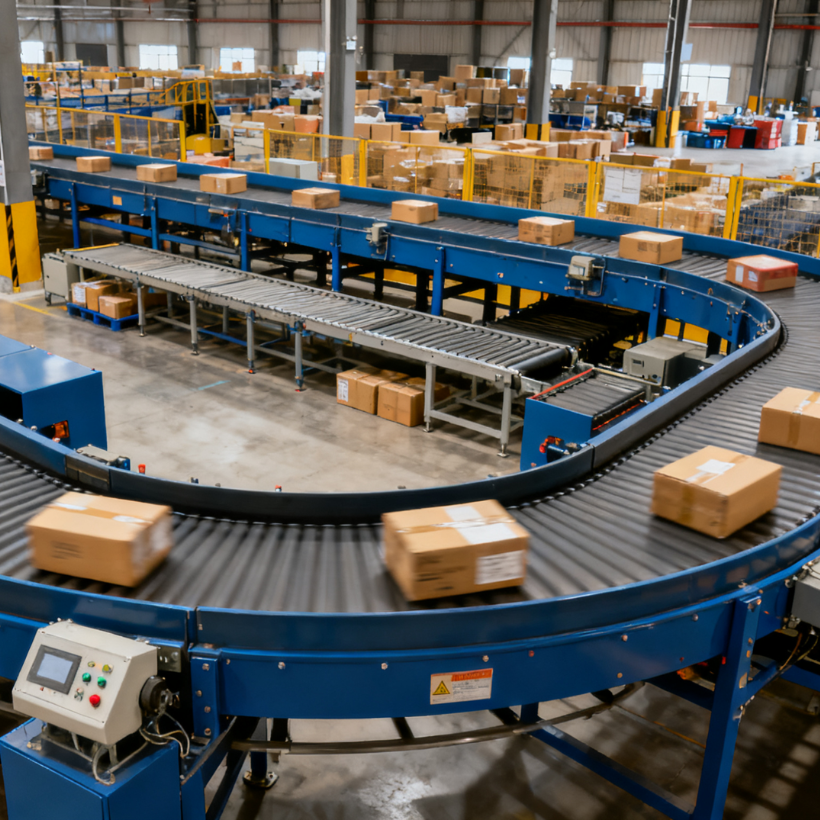
Supply chain management represents one of the most important aspects of the business world. Without efficiency and effectiveness in the management of supply chains, businesses will inevitably fall into the hands of competitors. Thus, the introduction of automated barcode scanning and processing systems has seen the emergence of trail blazing technology systems which can function in a real time environment and fulfill the demands of manufacturers and the pharmaceutical industry. This technology has led to the near complete automation of processing systems and has led to the elimination of sorting errors through the eradication of manual processing. Our systems allow for the processing of massive amounts of products while ensuring accuracy and at the same time lowering the risks involved in manual processing. In a world where theocracy is a prime directive, our systems allow for a higher volume of products to be processed without any errors.
Each system’s development starts with a close partnership with the buyer. Our engineering staff starts the development with a thorough investigation of the buyer’s working environment. This investigation includes an examination of the workflow, the types of materials the current system handling, the peak demand periods of the system, and any possible points of integration with the client’s current Warehouse Management Systems (WMS) and/or Enterprise Resource Planning (ERP) systems. This understanding prepares us to collaborate in the development of a sorting. The system is not simply a piece of equipment, but a whole integrated design. Fully understanding the details of the materials, how they are packaged, and where they need to go in the workflow, allows us to set parameters (e.g. scan angles, speed and sort logic) to develop the equipment to fit the system exactly. After we fully design the system, we move on to sample trial production and functionality testing. The goal is to build a component or subsystem and test it in conditions similar to those of the system so as to calibrate the system’s flexibility and operational ability before designing and building the complete system. During this step we confirm that the system meets all of the operational and throughput requirements. This step is concluded with a decision to move to mass production.
A workforce that operates around the clock, every single day, must be made up of highly skilled individuals. These individuals perform tasks that can't be automated, albeit over and over again. Hence, the workforce must be able to execute the job with 100% efficiency without the risk of making a mistake. The workforce must also be flexible and able to quickly adapt to responsibities across a large number of tasks.
The reliability, and the highly skilled nature of the workforce, also must not be compromised in the face of large changes, in external environmental parameters, much like a desert, with temperatures burning hot one day, and freezing the next.
These highly designed and manufactured systems not only promise a lengthy, and seamless reliability, but also seamless and effortless after sales support, where you do not need to be involved at all. The unplanned downtimes will be reduced to almost non-existent, and to ensure you'll get the utmost value, operational productivity will generate costs that will yield a return on the system that will be felt across the entire supply chain.
25
Sep
07
Nov
05
Nov
05
Nov
UIB (Xiamen) Bearing Co., Ltd. provides high-precision bearings for industrial machinery. Our durable design and precision engineering deliver reliable performance. Trusted by manufacturers. Request a quote today.With over 10 years in industrial conveyors, our company is a reliable global conveyor solution supplier, backed by industry insights and tech accumulation.
Room 1409, SM International Center, Xingshan Road, Huli District, Xiamen City, Fujian Province, China.
Copyright © 2025 by UIB (Xiamen) Bearing Co., Ltd. Privacy Policy

 EN
EN